Alejandro Melian · Game design
Shipped · Edenic Era · Steam · roguelite tower defense and survival

Transmu
Towers

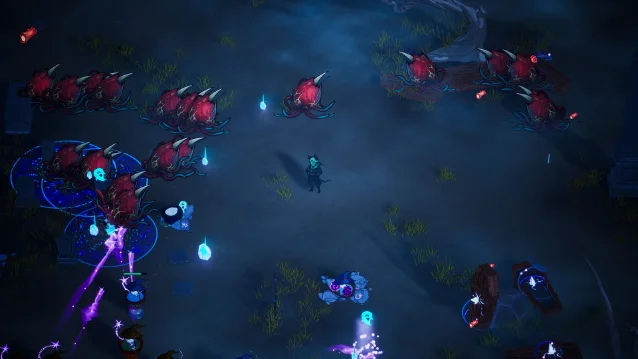
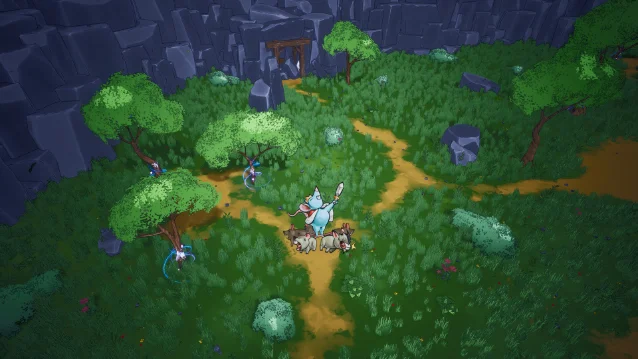
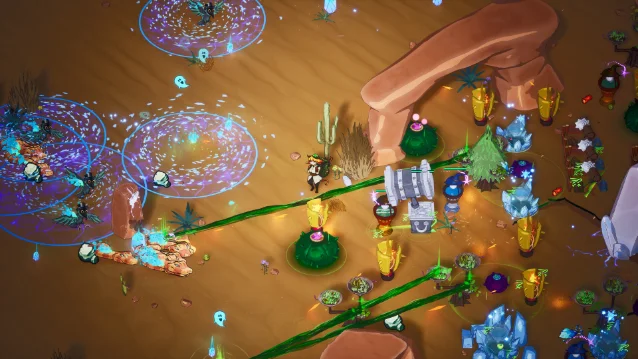
Choose your alchemist from a magical coven. Explore a hand-painted, post-apocalyptic fantasy world. Fend off hordes of magical beasts in this roguelite tower defense and survival game. Play solo or in co-op with up to 3 friends. Strategize and adapt in tower defense × survival × bullet heaven.

01

Trailer

Three genres in one encounter
Trailer · ReleasedWatch on YouTube ↗
03

Core loop

01
Choose
Pick an alchemist from the coven. The build starts before the wave does.
02
Fend off
Hordes of magical beasts arrive against your towers and your own survival at once.
03
Adapt
Strategise between waves and carry the run forward through the campaign.
04

What I owned

System Optimization & Balancing: Developed comprehensive spreadsheet models to balance complex, interacting variables across towers, enemy scaling, meta-upgrades, and in-session power-ups. Streamlined the in-game economy by refining and reducing redundant resource and currency loops.

Scope & Production Strategy: Onboarded mid-production and conducted an immediate design audit to refocus the game on its core production briefs. Redesigned meta-progression and power-ups by smartly reusing existing systemic architecture, significantly reducing development time and eliminating redundant mechanics.

Content & Gameplay Design: Overhauled the core tower roster to eliminate functional overlap. Detailed level layouts, defined distinct biome systems, and expanded enemy and boss variety to ensure diverse tactical challenges.

UX & User Research: Conducted targeted user research to identify friction points, subsequently improving the overall user experience through better in-game feedback, streamlined tooltips, and clearer QA systems.

BalancingSystems designMeta-progressionLevel designEnemy & boss designUser researchEconomyUXProduction strategy
Discipline
Balancing · systems · levels · UX research
Platform
PC — Steam
State
Released
Studio
Edenic Era
Team
9 people
05

Design problems

Interacting variables at scale
Towers, enemy scaling, meta-upgrades and in-session power-ups all move each other, so balancing had to happen in spreadsheet models before it happened in the build.
Overlapping towers and currencies
Several towers did the same job and several resources chased the same decision. Cutting the redundancy made every remaining choice mean something.
Bullet heaven and tower defense in one fight
Hordes big enough to feel like a bullet heaven still have to be legible against placed towers.
Scaling to four players
Co-op up to four means the same wave has to work at one, two and four times the incoming firepower.
06

Systems in the shipped game

~/projects/transmutowers
Towers
  • Multiple tower types
  • The player character can pick towers up and move them around mid-fight
  • Tower unlocks through meta progression
Combat
  • Elemental damage variety
  • Different enemy types
  • Bullet-heaven density inside tower-defense encounters
Progression
  • Meta upgrades and tower unlocks between runs
  • In-session upgrades and resource management
  • Characters with unique passive effects
Structure
  • Roguelite run progression through a campaign
  • Alchemist selection from a coven
  • Solo and online co-op up to four players
07

Team & pipeline

9 people · Monday reviews

Operating within a cross-functional team of nine, the production pipeline relied on structured agile methodologies and consistent stakeholder alignment to maintain momentum and clear development hurdles.

Cross-Functional Collaboration: Coordinated development efforts across a medium-sized team of nine, balancing individual gameplay and system design tasks with broader project goals.

Weekly Syncs & Unblocking: Facilitated weekly Monday evening reviews dedicated to showcasing functional progress, tracking sprint deliverables, and actively discussing and resolving technical or design blockers.

Stakeholder Alignment: Conducted bi-weekly deep dives with the Product Owner to review the overarching state of the game, evaluate milestone progress, and provide detailed updates on individual design trajectories.

08

Postmortem

What we would do differently
User research came too late
The main focus of the retro was the lack of user research on the project. Game systems were tested too far into development, and not enough value was given to user insight on gameplay and pain points.
Redundant systems
Too many systems overlapped, which meant several choices in a run resolved to the same decision.
Enemy variety
The lack of mechanical variety in the enemy roster made many encounters across the biomes feel similar.