Alejandro Melian · Game design
Shipped · itch.io · Indaga Studios · narrative puzzle

Cusco
Paradox

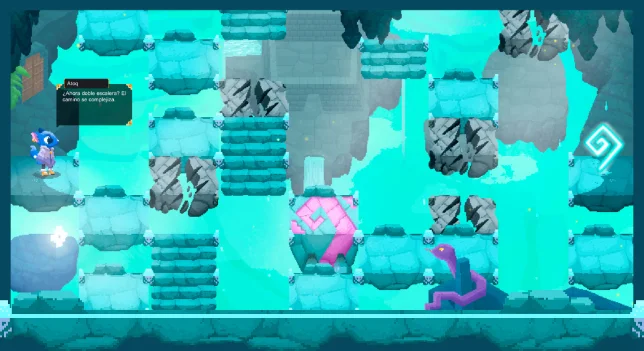
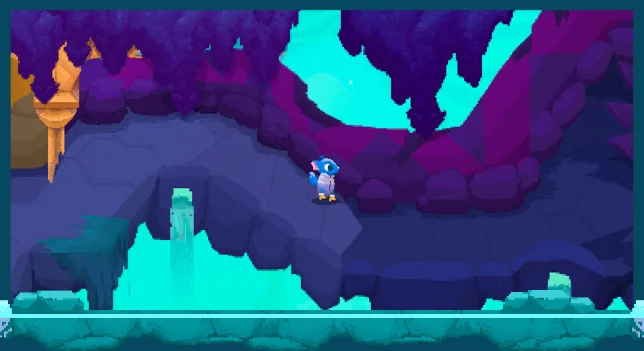
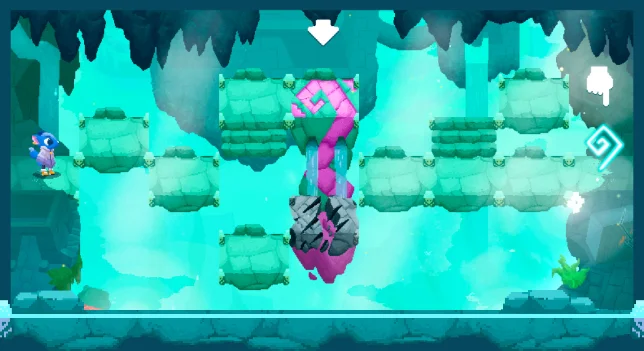
Cusco Paradox is an LGBTQ+ narrative puzzle game about a fox being trapped in the Incan netherworld. A journey of forlorn love and discovery, Atoq the Fox has lost his memories and must delve deep into this world to recover both his memories and his boyfriend. Move the blocks to build a path through the shrines and travel the nether.

01

Trailer

Blocks build the path forward
Trailer · ReleasedWatch on YouTube ↗
03

Core loop

01
Analyze
Analyze the puzzle before you.
02
Build
Solve it by moving the pieces into the right order.
03
Uncover
Uncover the narrative of the world.
04

What I owned

Vision & Team Production: Co-defined the game's core vision based on client requirements and assisted in production management, keeping the team organized and aligned throughout a rapid one-month demo cycle.

Puzzle & Level Design: Designed and implemented the spatial block-moving puzzle mechanics and level architecture, alongside building intuitive tutorials to guide the player experience.

Animation & Narrative: Animated character assets and collaborated on the narrative design, helping to shape and execute an introspective LGBTQ+ storyline set within the Incan netherworld.

Documentation & Research: Built the GDD, and ran user research and playtesting on the demo.

Puzzle designLevel designTutorialsNarrative designGDDUser research & testingAnimationProduction support
Discipline
Puzzle · levels · narrative · GDD · research
Platform
PC — itch.io
State
Released
Team
4 — Indaga Studios, one-month demo cycle
05

Design problems

Puzzle carrying narrative
Memory recovery is the reward structure, so shrine order has to serve both difficulty and story order.
One designer, five disciplines
Gameplay, levels, AI, interface and VFX all moved on the same schedule, which meant scoping each against the others.
06

Systems in the shipped game

~/projects/cusco-paradox
Puzzle
  • Block-pushing traversal
  • Shrines as discrete puzzle spaces
  • Path construction as the win condition
World
  • Incan netherworld setting
  • Memory recovery as progression
  • Narrative gates between shrines
07

Team & pipeline

4 people, one month

My daily pipeline is heavily structured around alignment, iterative momentum, and bridging the gap of a fully remote team. To maintain the frictionless collaboration of a physical studio, I implemented a 'virtual office' approach using Discord, where every team member maintained their own active voice channel.

We kick off with a morning sync to prioritize tasks, and throughout the day, this open-channel setup allows us to drop in and resolve blockers instantly without scheduling overhead. In the afternoons, I pair up with my co-designer to review work and iterate. We close out with a brief end-of-day touchpoint to catch any deviations, allowing me to prep solutions for the next morning.

To anchor this highly active environment, I enforce strict meeting hygiene: I conclude every discussion by verbally summarizing our agreements and immediately post the actionable notes to our group chat for complete visibility.

Postmortem
Process & Pipeline: Our team retrospective prioritized optimizing cross-disciplinary communication, specifically streamlining the handover documentation for system designs between the design and programming teams.
Gameplay & Onboarding: Playtesting validated our puzzle design, revealing a successful, dynamic difficulty curve that accommodated various player skill levels. However, it also highlighted a clear need to iterate on the tutorial to create a more frictionless onboarding experience.
Scalability & Vision: Following the project’s delivery, client strategy discussions shifted toward the game's future architecture—focusing on how to evolve the current linear narrative structure into a highly scalable, procedural system.